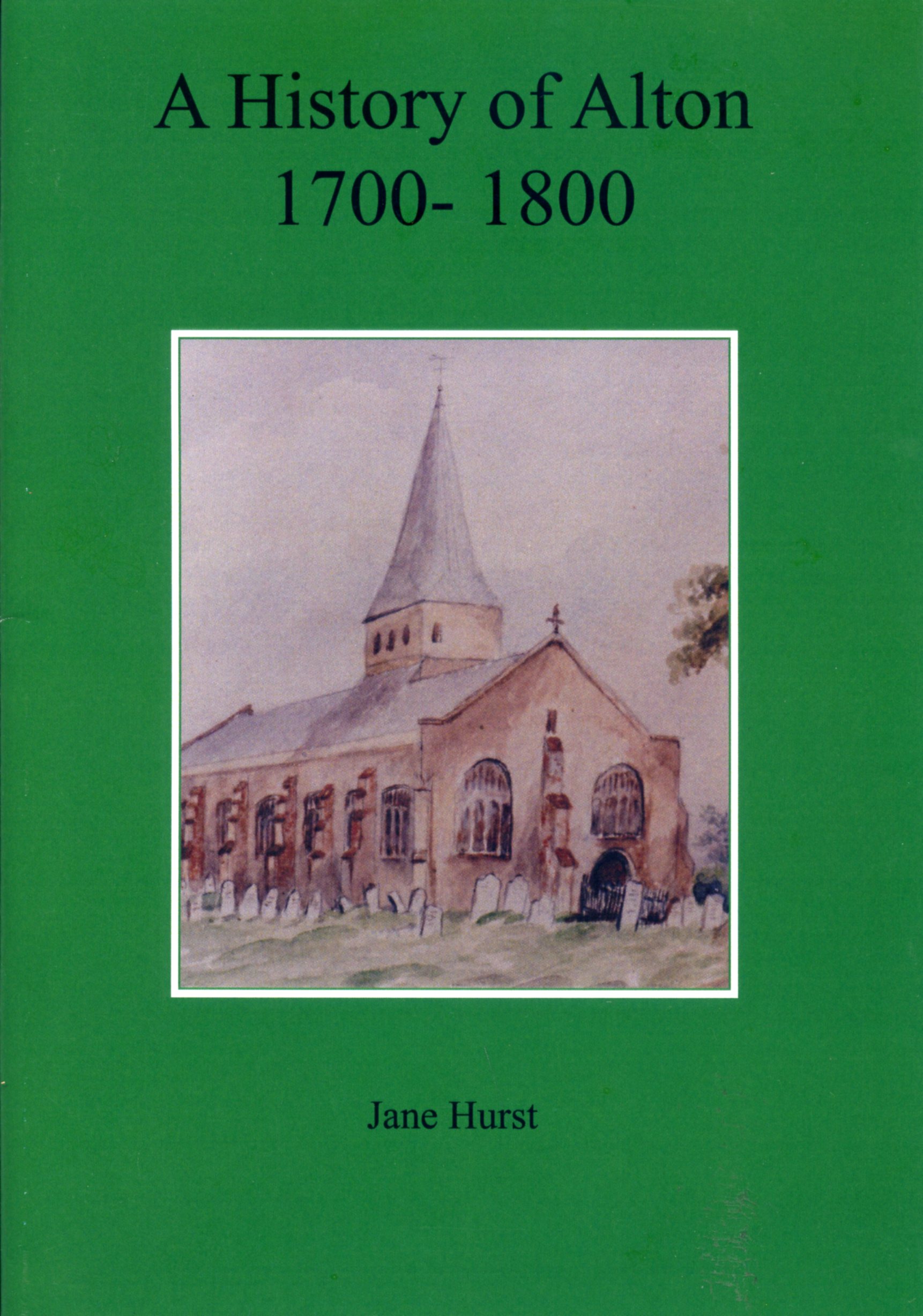
Life in the Alton area during the 18th Century
Price £3.00 plus P&P
Availability: Contact the publisher
A
History of Alton 1700 to 1800
|
|
Life in the Alton area during the 18th Century Price £3.00 plus P&P Availability: Contact the publisher |
Paperback - 48
pages
Jane Hurst; 2026
Associated titles: Alton Papers 5 , Alton Papers 6 , Alton Papers 7 , Alton Papers 8 , Alton Papers 9 , Alton Papers 10 , Alton Papers 11 , Alton Papers 12, Alton Papers 13, Alton Papers 14 , Alton Papers 15 , Alton Papers 16 , Alton Papers 17 , Alton Papers 18 , Alton Papers 19 , Alton Papers 20 , Alton Papers 21 , Jane Austen & Alton , Jane Austen & Chawton , Miss Bell's Fountains , Alton's Inns , Alton's Pubs , Alton's Motor Traders, part 1 , Alton's Motor Traders, part 2 , Hartley Mauditt House
This book links two previous ones: 'A History of Alton 1650-1700' and 'A History of Alton 1800-1850'.
Please contact the publisher if you would like to share information on the contents of this book.